
The Universe

Messages
155
Reaction score
87
Points
28
Screenshot_20260808-135635_1.jpg
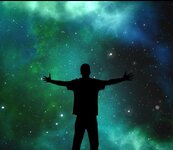
There are moments when I look at the night sky and forget every problem that once seemed important. I stand beneath countless stars and quietly ask myself a simple question: "What is the universe?" However, the more I search for the answer, the more I realize that the universe is not only a collection of stars and planets but it is the greatest mystery ever known, the home of every galaxy, every living creature, every thought, and every dream.

The universe includes everything that exists like space, time, matter, energy, light, gravity, planets, stars, galaxies, black holes, and even the tiny particles that cannot be seen with the naked eye. According to modern science, the universe began about 13.8 billion years ago in an event known as the Big Bang. As I continued learning, I discovered that everything in the universe can be understood through two great foundations matter and energy. Matter is anything that has mass and occupies space and it forms the Earth beneath my feet, the air I breathe, the water I drink, my own body, the stars shining above me, and many more. Matter itself is built from atoms, and atoms contain protons, neutrons, and electrons. As per, these tiny particles combine in countless ways to create every object we can touch and see.

Energy, on the other hand, is the ability to cause change or perform work. Unlike matter, energy is not something we can hold in our hands, yet it exists everywhere, for instance: sunlight warming my face, electricity powering cities, the heat of fire, the motion of the wind, and even the chemical energy stored inside food are all different forms of energy. One of the greatest scientific discoveries is that matter and energy are deeply connected. Taking it forward, Albert Einstein expressed this relationship through the famous equation "E = mc²," showing that matter can become energy and energy can become matter under certain conditions.

Nevertheless, the deeper scientists explored the universe, the more surprising the discoveries became. Ordinary matter—the matter that forms stars, planets, animals, and humans—makes up only about 5% of the entire universe. Around 27% appears to be dark matter, while nearly 68% is believed to be dark energy.

Dark matter remains invisible because it neither produces nor reflects light, yet so, telescope has directly seen it. Scientists know it exists because of its gravitational effects. Although we cannot observe dark matter directly, its influence shapes the large-scale structure of the universe.

Dark energy is even more mysterious, instead of pulling objects together like gravity, it appears to push the universe apart. On the other part, Observations show that the expansion of the universe is becoming faster over time. Scientists believe dark energy is responsible for this accelerating expansion, yet its true nature remains one of the greatest unsolved questions in science.

Interestingly, the universe is also governed by beautiful laws that never change. Gravity pulls objects toward one another, keeping planets in orbit around stars and stars within galaxies. The laws of motion explain how objects move. The laws of thermodynamics describe how energy flows and changes. The speed of light sets the ultimate speed limit of the universe. These laws work everywhere—from the smallest atom to the largest galaxy—revealing that the universe follows order rather than chaos.

Another lesson, I learned is that everything in nature is connected. The carbon inside my body was once created in the heart of an ancient star. The oxygen I breathe was forged through stellar processes billions of years ago. When massive stars reached the end of their lives, they scattered these elements across space, allowing new stars, planets, and eventually life itself to form. In this sense, every human being is made from stardust. The universe is not separate from us; we are one of its many expressions.

Whenever I think about these truths, I become more humble. My all worries become smaller, while my curiosity becomes greater. The universe teaches patience because stars take millions of years to form. Despite, it teaches change because nothing remains exactly the same forever. It teaches balance because every action has consequences. It teaches unity because every particle, every planet, and every living being shares the same cosmic origin.

Additional, loving the universe does not require traveling into space, but it begins with respect and wonder. I love the universe by protecting the Earth, because it is the only known home of life. I love it by learning science, asking thoughtful questions, and remaining curious instead of fearful. I love it by looking at the night sky and remembering that I belong to something unimaginably vast. Every new discovery reminds me that knowledge is endless and that humility is the first step toward wisdom.

As I finish writing, I realize that my journey has only begun. The universe still holds mysteries beyond human imagination. And dark matter has not been directly discovered, however, dark energy remains unexplained. As black holes challenge our understanding of physics and countless worlds may still be waiting to be found. Yet perhaps the greatest lesson is not that we already know everything, but that we continue searching.

Above all, Every question I ask brings me one step closer to understanding the universe and, in return, understanding myself. The universe is not merely the place where I live—it is the story of my origin, my present, and my future. The more deeply I study it, the more deeply I learn what it means to be human.
 

Attachments
  • Screenshot_20260808-135635_1.jpg
    Screenshot_20260808-135635_1.jpg
    189.7 KB · Views: 2
Last edited:
View attachment 11548There are moments when I look at the night sky and forget every problem that once seemed important. I stand beneath countless stars and quietly ask myself a simple question: "What is the universe?" However, the more I search for the answer, the more I realize that the universe is not only a collection of stars and planets but it is the greatest mystery ever known, the home of every galaxy, every living creature, every thought, and every dream.

The universe includes everything that exists like space, time, matter, energy, light, gravity, planets, stars, galaxies, black holes, and even the tiny particles that cannot be seen with the naked eye. According to modern science, the universe began about 13.8 billion years ago in an event known as the Big Bang. As I continued learning, I discovered that everything in the universe can be understood through two great foundations matter and energy. Matter is anything that has mass and occupies space and it forms the Earth beneath my feet, the air I breathe, the water I drink, my own body, the stars shining above me, and many more. Matter itself is built from atoms, and atoms contain protons, neutrons, and electrons. As per, these tiny particles combine in countless ways to create every object we can touch and see.

Energy, on the other hand, is the ability to cause change or perform work. Unlike matter, energy is not something we can hold in our hands, yet it exists everywhere, for instance: sunlight warming my face, electricity powering cities, the heat of fire, the motion of the wind, and even the chemical energy stored inside food are all different forms of energy. One of the greatest scientific discoveries is that matter and energy are deeply connected. Taking it forward, Albert Einstein expressed this relationship through the famous equation "E = mc²," showing that matter can become energy and energy can become matter under certain conditions.

Nevertheless, the deeper scientists explored the universe, the more surprising the discoveries became. Ordinary matter—the matter that forms stars, planets, animals, and humans—makes up only about 5% of the entire universe. Around 27% appears to be dark matter, while nearly 68% is believed to be dark energy.

Dark matter remains invisible because it neither produces nor reflects light, yet so, telescope has directly seen it. Scientists know it exists because of its gravitational effects. Although we cannot observe dark matter directly, its influence shapes the large-scale structure of the universe.

Dark energy is even more mysterious, instead of pulling objects together like gravity, it appears to push the universe apart. On the other part, Observations show that the expansion of the universe is becoming faster over time. Scientists believe dark energy is responsible for this accelerating expansion, yet its true nature remains one of the greatest unsolved questions in science.

Interestingly, the universe is also governed by beautiful laws that never change. Gravity pulls objects toward one another, keeping planets in orbit around stars and stars within galaxies. The laws of motion explain how objects move. The laws of thermodynamics describe how energy flows and changes. The speed of light sets the ultimate speed limit of the universe. These laws work everywhere—from the smallest atom to the largest galaxy—revealing that the universe follows order rather than chaos.

Another lesson, I learned is that everything in nature is connected. The carbon inside my body was once created in the heart of an ancient star. The oxygen I breathe was forged through stellar processes billions of years ago. When massive stars reached the end of their lives, they scattered these elements across space, allowing new stars, planets, and eventually life itself to form. In this sense, every human being is made from stardust. The universe is not separate from us; we are one of its many expressions.

Whenever I think about these truths, I become more humble. My all worries become smaller, while my curiosity becomes greater. The universe teaches patience because stars take millions of years to form. Despite, it teaches change because nothing remains exactly the same forever. It teaches balance because every action has consequences. It teaches unity because every particle, every planet, and every living being shares the same cosmic origin.

Additional, loving the universe does not require traveling into space, but it begins with respect and wonder. I love the universe by protecting the Earth, because it is the only known home of life. I love it by learning science, asking thoughtful questions, and remaining curious instead of fearful. I love it by looking at the night sky and remembering that I belong to something unimaginably vast. Every new discovery reminds me that knowledge is endless and that humility is the first step toward wisdom.

As I finish writing, I realize that my journey has only begun. The universe still holds mysteries beyond human imagination. And dark matter has not been directly discovered, however, dark energy remains unexplained. As black holes challenge our understanding of physics and countless worlds may still be waiting to be found. Yet perhaps the greatest lesson is not that we already know everything, but that we continue searching.

Above all, Every question I ask brings me one step closer to understanding the universe and, in return, understanding myself. The universe is not merely the place where I live—it is the story of my origin, my present, and my future. The more deeply I study it, the more deeply I learn what it means to be human.
Wonderful it is.
 
This topic has always fascinated me. When reflecting on these matters, we might consider ourselves insignificant in the face of an expanding universe's vastness, yet I believe we should feel special given the possibilities. Ultimately, we are... "the universe's capacity to observe itself."
 
Top